







Danville High School (DHS) typically offers around 14 Advanced Placement (AP) classes for students to take in person. Classes depend on student interest, student qualifications, and teacher availability. In some cases, students have been able to take AP classes online per request.
This article will be referencing the Kentucky Department of Education (KDE) School Report Card for a majority of the analytics mentioned. However, some inconsistencies have been found between KDE’s report and Danville High School’s own records. All data relating to Danville’s own AP performances, enrollments, and numbers have been provided by or approved by Assistant Principal Shelby Cameron. According to KDE’s report in the 2024-2025 school year, 200 Danville students took at least one AP class, with 126 students taking the final exam and 88 students getting a passing score (3-5). However, there were 356 total enrollments due to students taking multiple AP classes; a total of 238 AP exams were taken, and 134 were passing scores.
Currently, at Danville, students are enrolled in or independently studying for the following courses:
- AP African American Studies
- AP Art
- AP Biology
- AP Calculus AB
- AP Calculus BC
- AP Chemistry
- AP English Language and Composition
- AP English Literature and Composition
- AP Environmental Science (APES)
- AP Music Theory
- AP Precalculus
- AP United States Government and Politics (AP Gov)
- AP United States History (APUSH)
- AP World History: Modern
Some other courses that are frequently offered at Danville, but are not available this year are:
- AP Computer Science Principles (AP CSP)
- AP Drawing
- AP European History
- AP Human Geography
- AP Physics I: Algebra-Based
- AP Psychology
- AP Spanish Language and Culture
- AP Statistics
Since AP elective courses outside of core departments are much harder to summarize, give advice for, and discuss the difficulty of, they will not be included in this article.
English
The English Department is home to the most popular AP class at DHS, AP Literature, taught by Laurie Pierce. Last year, the class had 49 students enrolled, 27 of whom had passing scores.
“It was the first year that I was teaching seniors that I had taught as freshmen… and encouraged them to take AP Lit,” Ms. Pierce said.
AP Literature is almost always entirely seniors. The class focuses on understanding literature, literary devices, and how to write a good essay. The class itself builds on tools most students have already learned. Ms. Pierce said the most difficult part is the readings.
“I think, over time, students’ ability to focus is broken up by the world that we live in and the devices we carry around,” she said.
Even though the class is an AP course, it builds on what students have been learning for 11 years: the mechanics of English and understanding written works. With a high class average and pass rate, if you can get through the readings, AP Literature is a moderately easy class all seniors should consider.
“Every student I’ve ever had who’s come into the class absolutely has the capability to be successful,” Ms. Pierce said.
The precursor to AP Literature is AP Language. AP Lang focuses on rhetorical analysis and argumentation in nonfiction. Ms. Blossom Brosi teaches the class to mostly juniors. It teaches students how to analyze a text, recognize literary and rhetorical devices, and make a strong argumentative essay. The class doesn’t have a large course load outside of class and has a high enrollment rate.
“We learn a lot more about essays and have a lot more experience writing compared to other English classes.” said junior Eliah Snyder who is in the class this year.
If you really hate argumentative writing, it’s not for you; otherwise it’s a great class to take, especially if you like “The Great Gatsby” by F. Scott Fitzgerald.
Social Studies
Currently, the most AP courses are offered in the social studies department, with four classes this year and two other classes that have been available past years. The social studies department also has some of the highest student enrollment with the 2nd-5th most popular AP classes in the school.
Additionally, the social studies department is home to the AP class with the highest pass rate, AP African American Studies taught by Tevin Washington. It saw a 100% pass rate last school year.
It is one of the most beneficial classes I’ve taken at Danville High School. It allowed me to learn about a side of history that’s not commonly taught, was highly engaging, and gave me a deeper understanding of the systems in place to disadvantage Black people.
The class itself was not very difficult, and there was not a lot of outside work. However, Mr. Washington said the course will continue to become harder as he gets used to teaching it and finds more materials. Already the class has seen an increase in textbook quizzes. Senior Anna Watson also highly recommends taking this class at the same time as AP United States History, as they follow a similar timeline and dive deeper into different topics, giving a more holistic view of American history.
The most commonly taken course in the social studies department is AP U.S. Government, which is typically offered for freshmen. Mr. Washington also teaches this class. The class covers the development of government throughout U.S. history, political beliefs, amendments and rights, the government process, and civil rights. While the content of the class is not too difficult, the pass rate is typically lower because it is many students’ first exposure to an AP class.
When asked about how teaching AP Government has affected the other classes he teaches, Mr. Washington said, “I think it gives me a good baseline of what students know and should know in terms of skills. I can see progress being made with students, not only in the skills, but becoming high school students and AP students.”
Overall, the class is not too difficult, and Mr. Washington makes sure students are well-prepared but also not overworked.
Following AP Government, students can take AP World History, a high contender for the most difficult AP course. This course is typically students’ first time really being challenged by a history class. It requires outside textbook reading, essay writing and studying. The content is relatively new to students, as they don’t typically have a strong introduction to world history.
Washington teaches the course and also calls it the most difficult social studies course.
“It’s so different in terms of the workload and feel, and me being me, I try to make it more difficult than the AP test, so that they feel confident and comfortable taking the test and passing,” he said.
The final course students usually take in the social studies department is a U.S. History course. AP United States History (APUSH), taught by Mr. Joey Sallee, is typically entirely upperclassmen who have previously taken an AP course. This allows the course to move at a quicker pace, but slow down when needed for first-time students.
A majority of students have already been exposed to American history during school and have decent background knowledge outside of APs. So far, the students report that the pacing of the class is going well and the coursework is not too difficult. However, Mr. Sallee is known to assign a lot of textbook readings with questions in the class, so if you don’t have time to sit down almost every night for 20 minutes to read and take notes, it may not be a realistic class for you.
At one point in the class, Sallee dressed as a preacher from the Great Reformation and began to preach to students to mimic the times. Students who took the class reported that the class itself was enjoyable and not too difficult, making it a good choice for anyone interested in U.S. history.
There are three AP social studies classes that have been offered in the past at Danville High School that are not available this year. AP Human Geography is typically a freshman course that has been described as relatively easy, although DHS has not offered it for four or five years now. AP European History was offered two years ago but wasn’t able to be offered last year. The first semester of the class is similar to AP World, but it becomes more focused on Europe as the course goes on. Mr. Washington is preparing for it to be offered next year. Mr. Sallee taught AP Psychology last year.
“That class was not easy for me,” said senior Cheyenne Garcia. “They said, ‘psychology is the easiest class you can take.’ Well maybe, but not for me.”
Math
Danville High School currently offers two AP math classes, AP Precalculus and AP Calculus. In AP Calculus, students have a choice between Calculus AB or Calculus BC; these options vary in difficulty, with Calculus BC being more fast-paced and in-depth than AB.
While each course is technically open to anyone who has taken the prerequisites, the classes themselves are quite difficult. AP Precalculus can be taken by sophomores, juniors or seniors depending on where they are in the math track. Algebra I and II, and Geometry must be taken prior.
AP Precalculus had a relatively high pass rate last year, even though it is seen as one of the most difficult AP classes. The course itself is relatively new and was co-taught by Mr. Rob Kremer and Ms. Chelsea Frasure last year and solo taught by Ms. Frasure this year.
“Half of it I struggled a lot but then the other half was easy,” said Senior Sadie Pusateri. “The difficulty varied by unit … The class would have been a lot harder if I didn’t have that advanced background.”
AP Calculus AB/BC is only offered to seniors who have the prerequisites of Algebra I, II, Geometry, and Precalculus, meaning students have to have taken Algebra in 8th grade or taken two math classes in one year. Not to mention, the class size has grown smaller as the popularity of dual credit courses has risen.
However, according to Mr. Kremer, work is being done in the math department to make it easier for students to switch to advanced classes or switch out of the advanced path. Last year, calculus had a very low pass rate, but the math department reports big changes were made over the summer to improve student success.
“This year, the [Calculus] class is entirely AB… I’ve been able to manage the pacing and all of that stuff a lot better than in those last couple of years. I’m really optimistic about where we’ll be able to get by the end of the year because of that,” Mr. Kremer said.
“AP Calculus AB has definitely been my hardest class, but the way Mr. Kremer teaches and the resources he gives like the recorded videos and answer keys do help. For anyone who is wanting to take AP Calculus, I would say be ready to put in more effort than other classes, and keep a binder with your notes and quizzes from each unit to study for AP tests.” said senior, Anna Watson who is currently enrolled in the class.
However, since all the students in the class have been in advanced classes since middle school, or done extra work to make their way into Calculus, the class itself feels like another difficult math course, not too different from any other math course.
In the past, DHS has also offered AP Computer Science Principles (CSP) and AP Statistics. AP CSP is typically taken by students as an additional math credit or science credit. The course itself is very easy and doesn’t require a background in coding since it teaches you the base for everything. The only prerequisite to this course required by Danville is Geometry, which doesn’t come up a whole lot in the course itself.
This year, the class is not being offered at DHS. AP Statistics is usually taught by Mr. Kremer, but it has been unavailable for the past few years due to student interest growing around dual credit math. Also, because the math class order has changed over time, fewer juniors are in AP Calculus, and fewer math classes need to be filled by seniors that have already completed the traditional math curriculum, making enrollment in math electives fewer.
Science
The science department has seen the most change this year, with three new teachers joining the department.
AP Biology, which has been offered for many years mainly to sophomores, builds on mostly middle school science courses. Last year, the class was taught by an online teacher and an in-person aide; despite this setback, many students passed the exam and felt they learned a lot from the class.
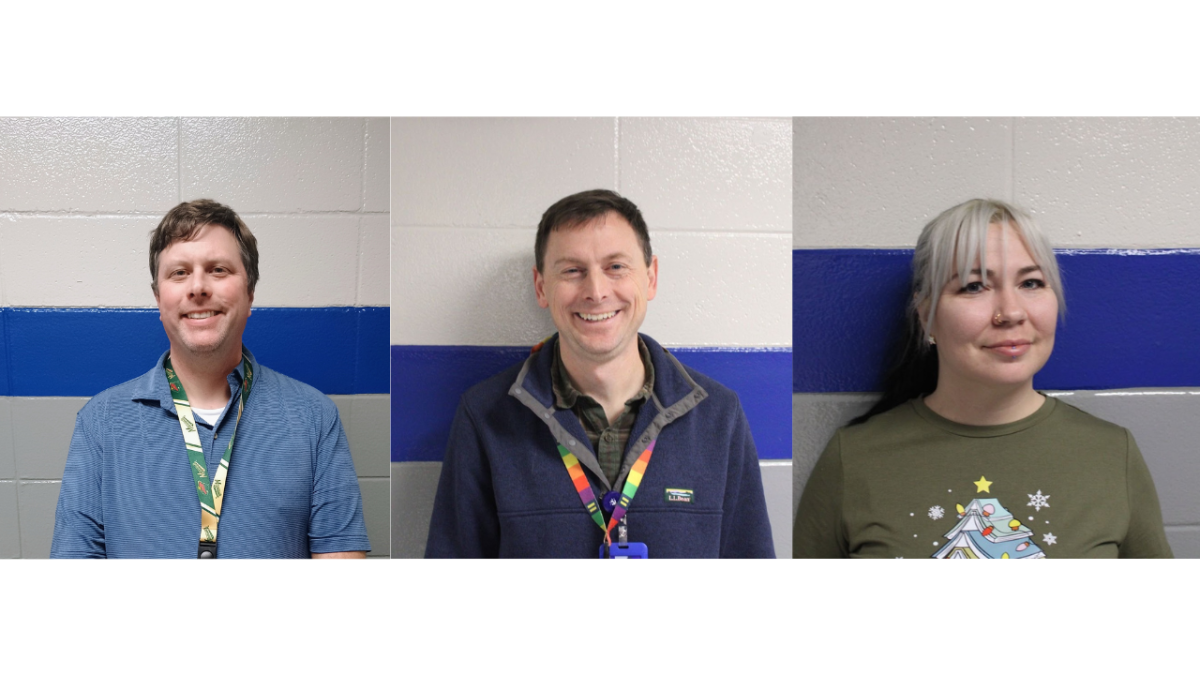
Mr. James Ramsey, the department head and current teacher of AP Biology, says the course is a good option for anyone who hasn’t taken an AP science course because no prerequisites are needed except for a good middle school science education. Mr. Ramsey said he’s working to support Ms. Shelby Gordon and Mr. David Purdom in teaching APs—since they’re both in their first few years of teaching at DHS.
Ms. Gordon teaches AP Environment Science (APES), a small class of nine with a majority of upperclassmen. While APES doesn’t technically require any prerequisites, the course itself builds strongly on an existing knowledge of biology. According to the students in the class, the course is relatively easy, with fun projects like tilth testing and algae growth tracking. It allows a deeper look into the Earth’s environment and humanity’s role in it, sort of like AP Biology but more generalized.
When I have asked peers what they think the most difficult AP course at Danville High School is, the resounding answer has been AP Chemistry taught by Mr. Purdom. Despite College Board reporting the national pass rate being relatively high last year, Danville had a 0% pass rate. Work is being done by Mr. Ramsey and Mr. Purdom in the science department to make AP Chemistry a stronger course by both supporting Mr. Purdom in his second year teaching the course and adapting to the new structure introduced by the College Board last year.
Though AP Chemistry is seen as one of the hardest AP courses at Danville High School, we can have hope for future years as the science department and students work together to make AP Chemistry more approachable.
Summary
Danville High School has plenty of AP courses for students to take, taught by teachers who care deeply about the students themselves and their education. While we saw some setbacks last year, it’s clear that teachers are already making changes to make students as successful as possible, and that we can see growth in the coming years. As Ms. Pierce said, “Every student I’ve ever had who’s come into the class absolutely has the capability to be successful.”